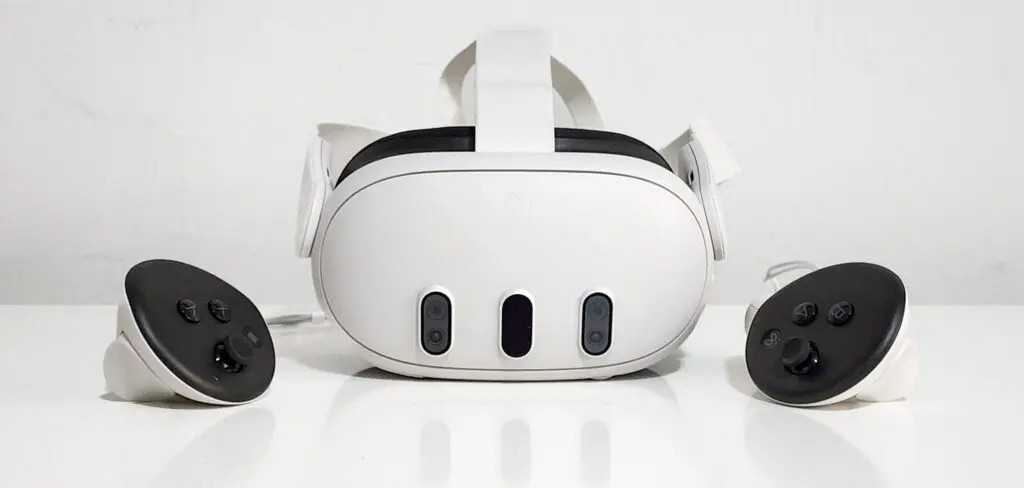
Meta Quest 3 Review (2026): The Best Headset for Sim Racing?
The Meta Quest 3 is the undisputed king of "bang-for-buck" in sim racing.
February 11, 2026 admin No Comments
Quick Verdict: The Meta Quest 3 is the undisputed king of “bang-for-buck” in sim racing. The pancake lenses solve the “blurry dashboard” issue of older headsets, and the wireless freedom makes it perfect for multi-use gaming. However, you will need to buy a battery strap to race for more than 90 minutes.
For years, sim racers had to choose between “Cheap & Blurry” (Quest 2) or “Expensive & Wired” (HP Reverb G2 / Pimax). The Meta Quest 3 changes the math. It is the first mainstream headset that offers enough clarity to read the tiny numbers on a Ferrari dashboard without needing a $2,000 PC.
KartVR Score: 9.5 / 10 (Editor’s Choice)
The Visuals: Why “Pancake” Matters
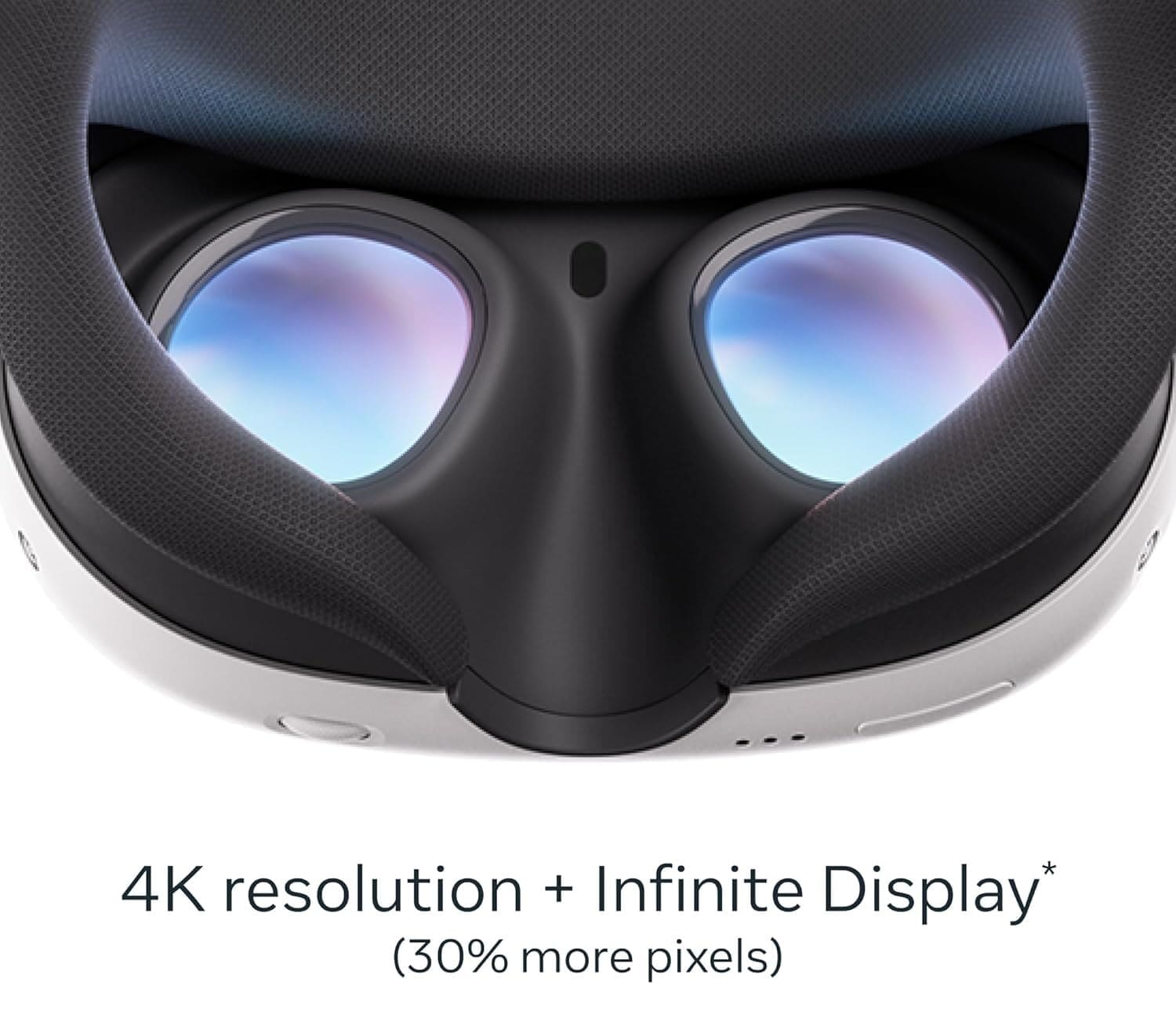
If you are coming from a Quest 2, the difference is shocking. The Quest 3 uses Pancake Lenses.
-
The Sweet Spot: On older headsets, you had to move your head to look at your side mirror. On Quest 3, you can just move your eyes. The edge-to-edge clarity is massive for racing because you can glance at your lap times without losing focus on the track.
-
Resolution: At 2064×2208 pixels per eye, the “Screen Door Effect” (seeing the grid of pixels) is virtually gone. You can spot a braking marker 200 meters away clearly.
PC VR Performance
We tested this with Automobilista 2 and iRacing using a USB-C Link Cable.
-
120Hz Mode: The headset supports 120Hz, which makes fast cornering feel incredibly smooth.
-
Compression: Because it doesn’t use a DisplayPort cable (like the Pimax), there is slight compression if you look closely at grey asphalt. However, if you bump the bitrate to 500mbps in the Oculus Debug Tool, it looks near-native.
Comfort & Build
This is the weak point. The stock fabric strap is flimsy.
-
Face Pressure: The headset is slimmer, but the stock strap puts weight on your cheeks. After a 45-minute race, you will have “VR Face.”
-
Battery Life: Driving draws power. Expect 90 minutes of battery. For endurance racing, you must buy a third-party strap with a battery pack (we recommend the BoboVR or Kiwi Design straps).
Mixed Reality: Useful for finding your water bottle or steering wheel without taking the headset off.
Value: Beats headsets that cost double the price.
Edge-to-Edge Clarity: You can read dashboards without moving your head.
Compression: Dark scenes (night racing) can look slightly grey compared to OLED headsets like PSVR2.
Comfort: You absolutely need to buy an aftermarket head strap (extra $50).
Battery Life: 1.5 - 2 hours max. Not enough for endurance races without a cable/battery pack.
Conclusion: The New Standard for Sim Racing
The Meta Quest 3 is not just an incremental upgrade; it is a generational leap for virtual reality driving. The introduction of pancake lenses solves the single biggest frustration of VR racing: blurriness. For the first time, you can glance at your fuel gauge or lap delta without moving your entire head to find the “sweet spot.”
While the battery life requires a third-party strap solution for endurance events, the sheer value proposition here is undeniable. You are getting near-PCVR headset clarity for a fraction of the price of a Pimax or Bigscreen Beyond. If you are currently racing on a Quest 2, the upgrade is absolutely worth it. If you are new to VR, this is the only headset you should consider starting with.
Where to Buy
👉 Check Price on Amazon (Meta Quest 3) 👉 Essential Add-on: Kiwi Design Battery Strap